
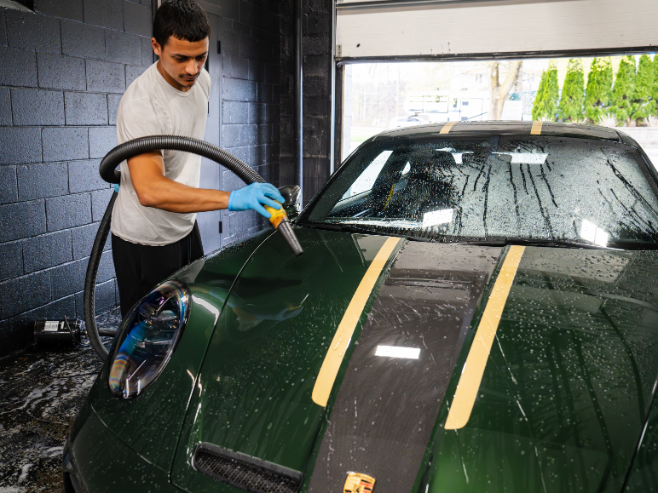
The hood is one of the first parts that drivers think about having paint protection film on. More than anything else, know your new car probably sits directly in the line of fire for gravel, road debris impacts, and bug splatter at high speed.
The tougher call is whether your PPF car package should encompass the entire hood or just its leading edge.
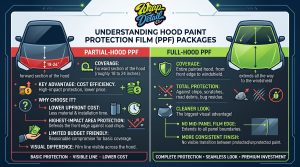
Both approaches can protect vulnerable paint. Partial-hood PPF is more economical and protects the areas where impacts frequently happen. Full-hood PPF covers the complete panel and avoids a film edge line across the painted surface.
For the bulk of owners who want protection, but in equal measure also want their ride to look the part, full is seemingly cleaner. Even when 100% protection is not an option due to budget challenges, partial coverage still makes sense if the objective is simply to ensure that your most critical region remains at least somewhat protected.
Key Takeaways
- Full-hood PPF covers the more comprehensive panel and does away with the horizontal film line common on most partial-coverage installations.
- Partial-hood PPF offers some cost savings for the most protected part of your vehicle (the portion directly in front and exposed to debris).
- Partial film edge visibility will depend on paint color, dirt buildup, viewing angle, and maintenance.
- In the case of habitual highway drivers, full-hood coverage is far more sensible. Primarily for those who want a uniform look.
- Partial coverage will be usable in case the budget is stretched or lacking, or even if a few selected areas of your car are only lightly exposed on the road.
- Both choices offer some paint chip protection, but neither is 100% damage-free.
Why Is the Hood a High-Priority Area for PPF?
The hood receives direct exposure to road hazards because of its position at the front of the vehicle.
Loose stones, sand, insects, road tar, and debris can strike the surface while driving. PPF car cover creates a physical barrier between those hazards and the factory paint.
Modern films can also include self-healing top layers. Minor scratches or marks in the film may become less noticeable when heat is applied, although more serious damage can remain.
Because the hood is large and highly visible, choosing where the film stops can affect appearance as much as protection.
What Makes the Hood More Vulnerable?
The hood faces a combination of forward-facing impact and a broad exposed surface.
Highway Debris
At higher speeds, loose gravel and road debris can strike farther up the hood than many drivers expect.
Bugs and Road Contaminants
Bug residue, road tar, and grime can also collect across the hood, especially on vehicles that spend significant time on highways.
What Is Partial-Hood PPF?
Partial-hood PPF car covers only the forward section of the hood rather than extending all the way to the windshield.
A traditional partial-front package may cover roughly the first 18 to 24 inches of the hood, depending on the vehicle and installation pattern.
Why Choose Partial-Hood Protection?
The main advantage is cost efficiency.
Instead of paying to cover a large panel completely, you protect the section closest to the front of the vehicle.
Lower Upfront Cost
Partial coverage uses less material and requires less installation time than full-hood coverage.
Protection in the Highest-Impact Area
The front edge of the hood receives a significant amount of road exposure, so protecting this section can still prevent many routine chips.
Better Fit for Limited Budgets
If your priority is basic front-end protection without spending on full coverage, partial PPF can be a reasonable compromise.
What Is Full-Hood PPF?
Full-hood PPF covers the painted hood from front to back rather than stopping partway across the panel.
This protects the entire surface against chips, scratches, road debris, bug residue, and other everyday exposure.
Why Does Full-Hood PPF Look Cleaner?
The biggest visual advantage is the absence of a film line running across the center of the hood.
No Mid-Panel Film Edge
With full coverage, the film extends to the panel boundaries instead of ending partway across the hood.
That creates a more uniform appearance.
More Consistent Finish
Because the entire hood is covered, there is less chance of seeing a visual transition between protected and unprotected paint.
Ready for a Better-Looking Ride? Request a Quote Today!
CALL NOW (978) 815 0586
Does the Edge of Partial PPF Become Visible?
It can.
A well-installed partial hood may look subtle when everything is clean, but the film edge can become easier to notice over time.
What Can Make the Edge More Noticeable?
Several factors affect how visible the line becomes.
Dirt and Residue
Dust, wax residue, and road grime can collect along the film edge if the area is not maintained carefully.
Paint Color
Some paint colors and finishes make the transition easier to see than others.
Lighting and Viewing Angle
Reflections across a large hood can highlight the line from certain angles.
Partial PPF does not automatically look bad, but if a seamless appearance matters to you, full-hood coverage removes this concern.
Which Option Provides Better Rock-Chip Protection?
Full-hood PPF provides more complete protection because more of the hood is covered.
Partial film only protects the area beneath it. Any exposed section farther back can still receive chips.
When Full Coverage Has the Advantage
Full coverage makes more sense when debris exposure is harder to predict.
Frequent Highway Driving
If you spend a lot of time at highway speeds, rocks and debris can land beyond the first section of the hood.
Construction and Rough Road Conditions
Drivers who frequently encounter road construction, loose gravel, or poor road surfaces may benefit from protecting the entire panel.
When Partial Coverage May Be Enough
Partial coverage can still work well when exposure is lower.
Mostly Local Driving
If most trips are short and at lower speeds, the front section may receive most of the impact.
Lower Cosmetic Priority
If you are comfortable accepting some chance of chips farther up the hood, partial coverage may provide enough protection.
Is Full-Hood PPF Worth the Extra Cost?
Full-hood PPF can be worth the added cost when appearance, complete panel protection, and long-term preservation matter to you.
Full-Hood PPF Makes More Sense When:
The Vehicle Is New or Higher Value
Protecting a clean hood from the beginning helps preserve its original finish.
You Plan to Keep the Car Long Term
The longer you own the vehicle, the more opportunity there is for chips to accumulate.
You Want a Cleaner Appearance
If a visible film edge would bother you, full-hood coverage is usually the better fit.
Partial-Hood PPF Makes More Sense When:
Budget Is the Main Constraint
Partial coverage provides useful protection at a lower cost.
Your Driving Exposure Is Limited
Low-mileage or mostly local drivers may not need full-panel protection.
You Want to Protect More Areas With the Same Budget
Instead of spending more on the hood alone, you may prefer to protect the bumper, mirrors, rocker panels, or door edges as well.
How Should You Choose Between Full and Partial Hood PPF?
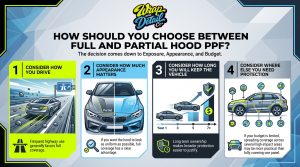
The decision comes down to exposure, appearance, and budget.
Consider How You Drive
Frequent highway use generally favors full coverage.
Consider How Much Appearance Matters
If you want the hood to look as uniform as possible, full coverage has a clear advantage.
Consider How Long You Will Keep the Vehicle
Long-term ownership makes broader protection easier to justify.
Consider Where Else You Need Protection
If your budget is limited, spreading coverage across several high-impact areas may be more practical than fully covering one panel.
Ready for a Better-Looking Ride? Request a Quote Today!
CALL NOW (978) 815 0586
Protect the Hood Before Chips Start Adding Up
Rock chips are much easier to stop than fix once they penetrate the paint. Partial and full-hood PPF will assist with this. However, they provide solutions at different levels.
With partial coverage, you only cover the most impactful area and keep costs lower! Full-hood PPF car protects better and visually breaks the edge across the panel.
A good installer should be trained on products and help you select the coverage that meets your vehicle, driving habits, aesthetic preferences, and budget. Here at Wrap and Detail Co., we have what it takes to walk you through making these decisions! Contact us to compare partial and full-hood PPF options for your car.
Frequently Asked Questions
Q: Is full-hood PPF better than partial-hood PPF?
A: Full-hood PPF provides more complete protection because the entire panel is covered. It also avoids the film edge that can appear across a partially protected hood. Partial PPF costs less and still protects the area most exposed to road debris.
Q: Can you see the line on partial-hood PPF?
A: Sometimes. The line may become more noticeable depending on paint color, lighting, dirt buildup, and maintenance. Professional installation can make the transition less obvious.
Q: How much of the hood does partial PPF cover?
A: Coverage varies by vehicle and installer, but many partial packages cover roughly the first 18 to 24 inches of the hood.
Q: Will full-hood PPF prevent every rock chip?
A: No. PPF can reduce damage from many common impacts, but unusually large or sharp debris can still damage the film or underlying paint.
Q: Is full-hood PPF worth it for highway driving?
A: It often makes more sense for frequent highway drivers because debris can strike beyond the front portion of the hood. Full coverage protects more of the panel without relying on a specific impact zone.
Q: Should a new car get full-hood PPF?
A: Full-hood PPF can be a good option on a new vehicle because the paint is still relatively free of chips. Whether it is necessary depends on how you drive, how long you plan to keep the car, and how much you value maintaining the original finish.
Our Services Include:
Whether you want to protect your vehicle’s paint, enhance its appearance, or give it a complete refresh, Wrap and Detail Co. is ready to help.
Need Professional Vehicle Protection? Get Your Free Quote Today!
Contact Wrap and Detail Co. to discuss your vehicle protection and detailing needs and find the right solution for your car.