
Full-body paint protection film covers more physical area than a partial or full-front package. The film is installed over nearly every painted exterior panel rather than just the bumper, hood, mirrors, and other high-impact areas.
This does not imply that your PPF car needs full coverage.
It would be full-body PPF that comes into play when you are trying to preserve the finish, but going beyond just the front of the vehicle is justified. This is especially true with newer cars, higher-end vehicles, special paintwork/rubbings, or for those who keep their car a long time and drive it often and want constant protection all over the vehicle.
It boils down to exposure, depreciation value, aesthetic expectations, and intended duration of ownership.
Key Takeaways
- Full Coverage Paint Protection Film protects not just the front end but also doors, quarter panels, rocker areas, and all painted surfaces.
- Full coverage is more easily justified on newer, higher-value, enthusiast, or long-term ownership vehicles.
- Some panels along the side and rear are still susceptible to scratches, scuffs, road grime, and contact with things in parking lots.
- You can protect your vehicle from stone chips, scratches, debris, and stains as well as environmental damage with the help of PPF.
- Modern premium films may self-heal minor marks in the film itself.
- Partial or full-front coverage often makes more sense when front-end protection is the main goal.
What Does Full-Body PPF Cover?
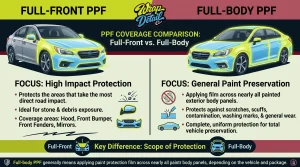
Full-body PPF car generally means applying paint protection film across nearly all painted exterior body panels.
That can include the hood, front and rear bumpers, fenders (front and rear), doors, quarter panels, and rocker areas that are painted, depending on the vehicle and package.
It aims for general paint preservation, not just protection of the areas that are most susceptible to rock chips.
How Is Full-Body PPF Different From Full-Front PPF?
Full-front PPF concentrates on the areas that take the most direct road impact.
Full-Front Coverage
This usually focuses on the hood, front bumper, front fenders, and mirrors.
For many drivers, those areas receive the majority of stone and debris exposure.
Full-Body Coverage
Full-body protection extends film across the rest of the painted exterior.
Those surfaces may receive fewer direct rock impacts, but they can still develop scratches, scuffs, contamination, washing marks, and general wear.
Ready for a Better-Looking Ride? Request a Quote Today!
CALL NOW (978) 815 0586
When Does Full-Body PPF Make the Most Sense?
There is no single vehicle type that automatically requires complete coverage. Several conditions make it more practical.
You Own a New or Higher-Value Vehicle
A newer car provides the chance to protect paint before noticeable wear and tear sets in.
If the car has a higher value as well. In other words, if it’s an expensive paint job or one you wish to keep looking pristine. It may be more logical to opt for 100% coverage rather than just covering up the nose section only.
Why Early Installation Helps
PPF protects what is already underneath it.
It does not erase existing chips or deep scratches. Installing film while the paint is still in good condition allows you to preserve more of the original finish.
You Plan to Keep the Vehicle Long Term
Long-term ownership gives cosmetic wear more time to accumulate.
A few marks during the first year may seem minor, but several years of daily driving can lead to chips, scratches, stains, and wear across multiple panels.
More Time Means More Exposure
If keeping the vehicle looking clean throughout ownership is important to you, broader protection may be easier to justify.
That is especially true if you plan to keep the vehicle well beyond the typical short ownership cycle.
You Drive or Park in High-Exposure Conditions
A PPF car is often associated with highway rock chips, but everyday wear can happen across the entire vehicle.
Tight Parking Areas
Parking garages and crowded lots can subject doors and quarter panels to light hits, scratches, or scuffs.
PPF won’t avoid scrapes or heavy hits, but it can help protect against lighter surface damage.
Road and Environmental Exposure
It can be more than just the front end that road tar, bugs, grime, loose debris, and other contaminants affect.
If you drive your car often or leave it parked outside, the paint is more likely to wear down.
Frequent Washing
Repeated washing can also create fine marks, especially when poor washing methods are used.
Some premium PPF car products include self-healing surfaces that can reduce the appearance of light scratches and swirl marks in the film.
You Want Consistent Protection Across the Vehicle
Some owners choose full-body PPF because they want all painted panels protected in a similar way.
With front-only protection, the covered areas receive one level of protection while the doors, rear quarter panels, and other exposed surfaces continue to age normally.
Full Coverage Creates a More Uniform Approach
Full-body film places a protective layer across most painted surfaces.
This can make sense if you care about the condition of the entire vehicle rather than only preventing visible stone chips on the front end.
You Own a Vehicle With a Special Finish
Certain paint finishes can be more difficult or expensive to repair consistently.
Unusual colors, matte or satin finishes, and specialty factory paint options may make owners more cautious about surface damage.
Repairing Specialty Paint Can Be More Complicated
Minor paint damage is not always solved with a simple touch-up.
Matching a specialty finish may require more extensive refinishing. PPF adds a sacrificial layer that can take some everyday wear before it reaches the paint underneath.
When Does Full-Body PPF Not Make Sense?
Complete coverage is not automatically the best use of every owner’s budget.
Your Main Concern Is Front-End Rock Chips
If your priority is protecting against stones and road debris, full-front PPF may provide most of the benefit you are looking for.
Covering the doors and rear panels may add little value if scratches in those areas are not a major concern.
The Vehicle Already Has Significant Paint Damage
Transparent PPF does not hide chips, deep scratches, or other defects.
Depending on the desired finish, paint correction or repair may need to happen before installation.
Normal Wear Does Not Bother You
Some owners are comfortable with the small marks that come with regular driving.
If cosmetic imperfections do not concern you, the additional cost of covering nearly every panel may not provide enough practical value.
Is Full-Body PPF Better Than Ceramic Coating?
Neither option is universally better because they address different problems.
PPF Provides Physical Protection
Paint protection film creates a physical barrier designed to help reduce damage from impacts, chips, and scratches.
Ceramic Coating Helps With Surface Maintenance
Ceramic coatings are mainly used for water repellency, gloss, easier cleaning, and resistance to certain contaminants.
They do not provide the same physical impact protection as PPF.
Some Owners Use Both
A vehicle can use PPF for physical protection and a compatible coating to make maintenance easier.
The right approach depends on whether impact protection, easier cleaning, appearance, or a combination of those goals matters most.
How Long Can Full-Body PPF Last?
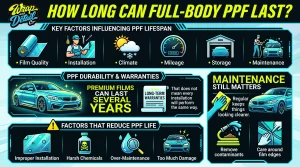
PPF lifespan varies with film quality, installation, climate, mileage, storage, and maintenance.
Premium films can last several years, and some manufacturers offer long-term warranties on certain products.
That does not mean every installation will perform the same way.
Maintenance Still Matters
PPF still needs regular care.
It is necessary to remove the contaminants rather than leave them on the surface for a long time. Washing and care around the migration of edges in the film toward other surfaces can also keep things looking clearer.
This film life can be reduced by improper installation, harsh chemicals, over-maintenance, or too much damage.
Ready for a Better-Looking Ride? Request a Quote Today!
CALL NOW (978) 815 0586
How Do You Decide Whether Full-Body PPF Is Worth It?
Start by thinking about what you actually want to protect.
If your main concern is the bumper and hood, targeted coverage may be enough.
If scratches or wear anywhere on the vehicle would bother you, complete coverage becomes more logical.
Consider factors such as:
- Driving frequency and road conditions
- Where the vehicle is usually parked
- Vehicle age and value
- Paint type and condition
- How long you plan to keep the car
- Your tolerance for cosmetic wear
- Your overall protection budget
The right package should match those priorities rather than simply cover the largest possible area.
Determine What Level of Protection Your Vehicle Really Needs
A full-body PPF car is most effective in situations where maintaining the overall appearance of your car outweighs just protecting against front-end rock chips.
Full coverage provides peace of mind that some owners are looking for. PPF is available in full front or partial coverage, where it provides adequate protection without the substantial cost.
We at the Wrap and Detail Co. are here to help compare coverage details based on vehicle type, driving conditions, and more, as well as priority in what is looked for: looks vs. protection (or both!). Feel free to contact us about whether full-body PPF or a more tailored protection plan is best for your vehicle.
Frequently Asked Questions
Q: Is full-body PPF worth it?
A: Full-body PPF can be worth it if paint protection is important, you intend on keeping the vehicle indefinitely or for longer than a few years, your vehicle is newer/high-value or simply because cosmetic wear across an entire body matters to you.
Q: Does full-body PPF prevent all scratches?
A: No. PPF is a self-healing material that can take care of many tiny scratches and surface scuffs. However, hard impacts or deep punctures will lead to dirt particles being deposited in the grooves, causing damage (like brake pads that ‘dust’ on rotors). Causing damage to it and, on occasion, the primer below as well.
Q: Is full-body PPF better than full-front PPF?
A: Full-body paint protection film (PPF) is more comprehensive, but when rock chips and road debris are your primary concern, full-front PPF usually provides better value.
Q: Should a new car get full-body PPF?
A: A new car can be a strong candidate because the paint has had less time to develop chips and scratches. Complete coverage makes more sense when long-term preservation is a priority.
Q: How long does full-body PPF last?
A: Lifespan depends on the film, installation, climate, driving conditions, storage, and maintenance. Quality films can last for several years when properly installed and cared for.
Q: Does full-body PPF require maintenance?
A: Yes. Regular washing, quick removal of contaminants, and careful cleaning around film edges can help maintain the film’s appearance and useful life.
Our Services Include:
Whether you want to protect your vehicle’s paint, enhance its appearance, or give it a complete refresh, Wrap and Detail Co. is ready to help.
Need Professional Vehicle Protection? Get Your Free Quote Today!
Contact Wrap and Detail Co. to discuss your vehicle protection and detailing needs and find the right solution for your car.