
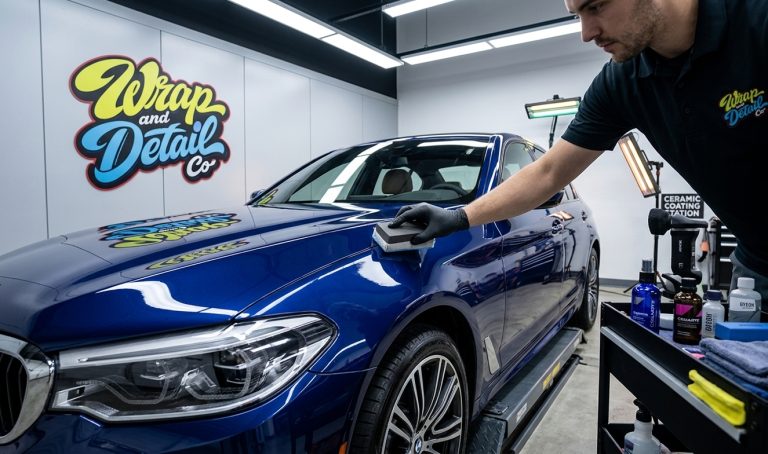
Ceramic coating gives paint a slick, glossy layer that makes washing easier and helps resist road grime. But ceramic coating cost varies a lot from shop to shop and car to car. Most of that difference comes from prep, not the bottle. Wrap and Detail Co in Westford, MA applies ceramic coatings for drivers across Greater Boston and Massachusetts. Here is what drives a quote.
Key Takeaways
- Paint correction is often the largest part of the job.
- Vehicle size and condition change prep time.
- Coating durability rating and number of layers matter.
- Extra surfaces, like wheels, glass and trim, add to the scope.
Ready for a Better-Looking Ride? Request a Quote Today!
CALL NOW (978) 815 0586
What Drives Ceramic Coating Cost?
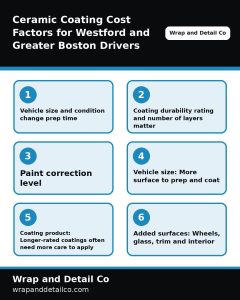
| Factor | Effect on the job |
| Paint correction level | Removing swirls takes hours of polishing |
| Vehicle size | More surface to prep and coat |
| Coating product | Longer-rated coatings often need more care to apply |
| Added surfaces | Wheels, glass, trim and interior |
| Condition | Heavy contamination needs extra decon |
Why Is Paint Correction So Important?
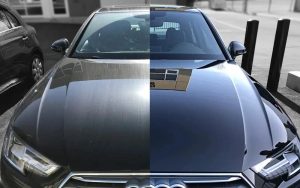
A coating locks in the finish beneath it. Swirls and scratches stay visible under a clear, glossy layer. Correcting the paint first is what makes a coated car look its best.
How Does New England Weather Factor In?
Road salt, sand and tree sap are tough on paint in Massachusetts. A coating makes it easier to wash those off, but it does not stop rock chips. Some drivers pair it with PPF on the front end.
How Do You Compare Quotes?
Ask what level of correction is included, which coating is used, how many surfaces are covered and what maintenance the warranty requires.
See our ceramic coating service, auto ceramic coating, detailing and paint protection film.
How Does Paint Condition Shape Ceramic Coating Cost?
A ceramic coating bonds to whatever surface it is applied over, so the condition of the paint underneath decides how much work comes first. A new car straight from the dealer often looks clean but carries light marring from transport and lot washing. A daily driver that has been through years of automatic car washes usually has a web of swirl marks and fine scratches across every panel. Each of those defects would be sealed in place under the coating, which is why correction comes before application.
The installer starts by measuring the paint. A paint depth gauge shows how much clear coat is left on each panel, and that reading tells them how aggressively they can polish. Light defects may need a single polishing step with a fine pad. Deeper scratches and heavy swirls usually need a cutting compound first and then a finishing polish to restore clarity. Every added step adds hours, and labor is the largest part of ceramic coating cost for most cars.
Why Does Decontamination Take So Long?
Paint that feels smooth can still hold bonded contamination. Iron particles from brake dust and rail lines embed in the clear coat and show up as tiny orange specks on light-colored cars. Tree sap, tar and industrial fallout stick to the surface as well. In Massachusetts, winter road treatments leave a film of salt and grime that settles into panel gaps and lower body sections.
The decontamination process removes these layers in order. A foam pre-wash softens surface dirt so it rinses away without scratching. An iron remover reacts with embedded metal and turns purple as it dissolves the particles. A clay bar or clay mitt then pulls away anything still bonded to the surface. Last, the panels are wiped with a panel prep solution that strips leftover oils from polishing so the coating can bond directly to the clear coat.
How Do Coating Grade and Layers Factor In?
Coatings vary in how much of the active ingredient they contain and how thick a layer they leave behind. Consumer spray products leave a thin film that may last a few months. Professional coatings form a harder, thicker layer and are often rated for several years with proper care. Some installers apply a second layer to add depth and durability, and some products include a separate top coat that boosts water beading.
Coverage also changes the work. Many packages include wheels, glass, trim and headlights in addition to paint. Wheel faces collect brake dust that bakes onto the surface, and a coating makes them easier to clean. Glass coatings help rain bead and roll off the windshield at speed.
What Does Curing Require?
Once applied, the coating needs time to harden. Most products need to stay dry for at least a day, and the car is often kept indoors overnight so temperature and humidity stay steady. Full hardness can take a week or more, and the car should not be washed with soap during that window. At Wrap and Detail Co in Westford, these steps are written into the quote, so you can see how prep, product and curing time each shape the ceramic coating cost for your car.
Ready for a Better-Looking Ride? Request a Quote Today!
CALL NOW (978) 815 0586
How Does Vehicle Size Fit In?
Larger vehicles simply have more paint. A full-size truck or a three-row SUV has a much bigger roof, hood and set of doors than a compact sedan, so correction and coating both take longer. Tall vehicles also need ladders or platforms to reach the roof evenly, which slows the work. Dark colors show every swirl under shop lights, so black and deep blue cars often need more polishing time to look right once coated.
Paint that has been resprayed after a repair also needs a closer look, since body shop clear coat can be softer than factory paint and polishes differently.
Get a Quote
Call (978) 815-0586 or contact Wrap and Detail Co for a ceramic coating quote in Westford and Greater Boston.
Frequently Asked Questions
Q: Does a new car need paint correction?
A: Often light polishing, since new cars can have dealer swirls.
Q: Does ceramic coating stop rock chips?
A: No. PPF is designed for chip protection.
Q: Do I still need to wash a coated car?
A: Yes. Washing is just easier.
Q: How soon can I wash my car after coating?
A: Most coatings need to stay dry for at least a day, and full hardness can take a week or more. Skip soap washes during that window so the coating can cure.
Our Services Include:
Whether you want to protect your vehicle’s paint, enhance its appearance, or give it a complete refresh, Wrap and Detail Co. is ready to help.
Need Professional Vehicle Protection? Get Your Free Quote Today!
Contact Wrap and Detail Co. to discuss your vehicle protection and detailing needs and find the right solution for your car.